Communicating with tenants: 8 rules for landlords

Your no-obligation quote in 2 minutes
What type of property management are you looking for?
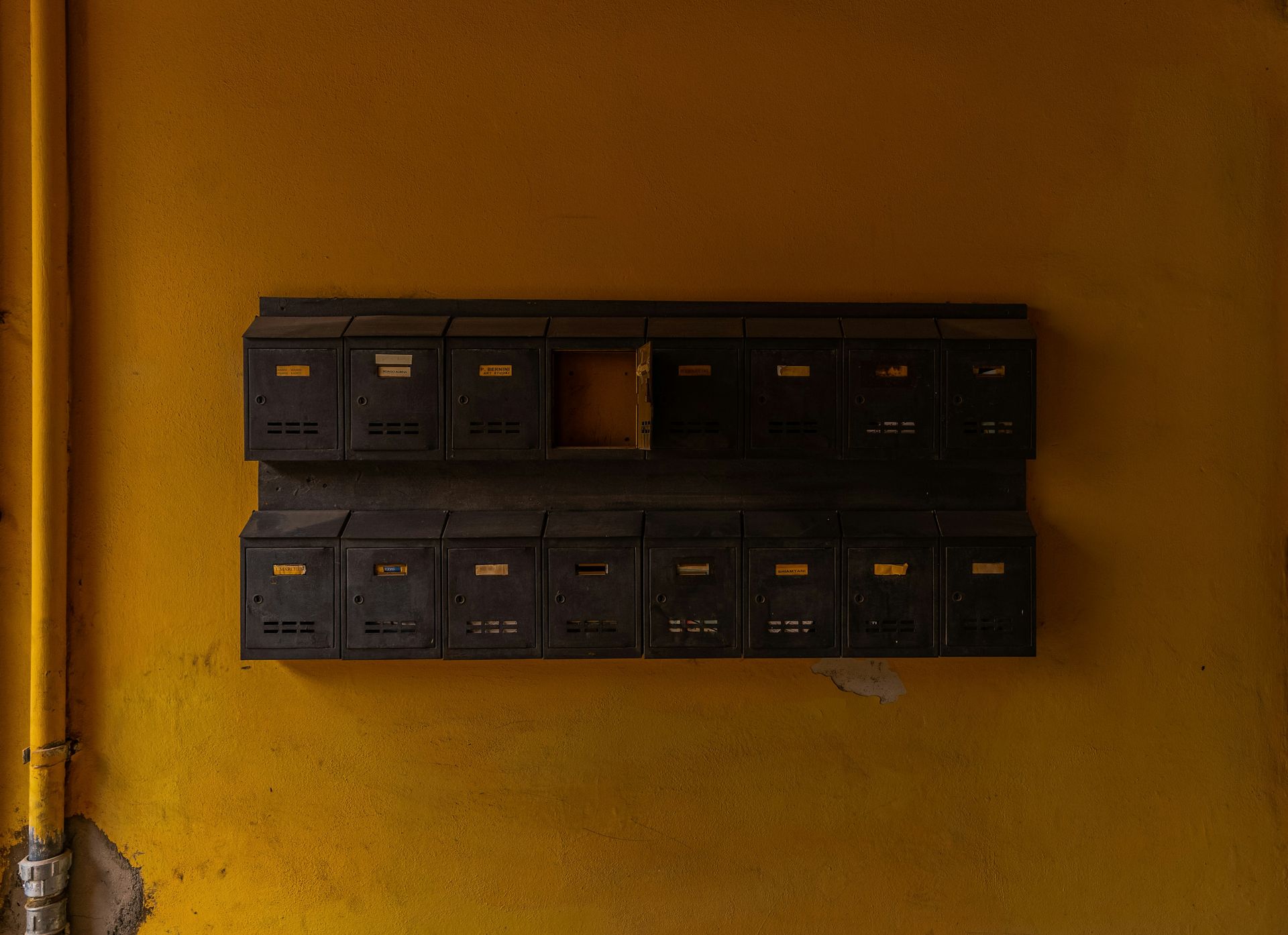
The tradesperson stands at a locked door because nobody knew he was coming. The tenant hears about the sale of her flat from the neighbours. The utility bill arrives without a word of explanation, and three days later an objection lands in the letterbox. Most conflicts between landlords and tenants do not start with an argument. They start with a message that was missing or misunderstood.
This guide shows how you, as the owner of a rented condominium flat or an apartment building in Germany, can communicate with your tenants: which rules prevent trouble, which form the law requires for notice, rent increases and utility statements, what is different in an owners' association (WEG), and which templates you can use straight away.
How should landlords communicate with tenants?Link to this section
Good communication with tenants is predictable, written and factual. When a tenant moves in, agree how and when you can be reached. Announce everything that affects the flat, acknowledge every report with a next step, and keep to the legal form requirements. Anything involving deadlines or money belongs in text form or written form.
The eight rules at a glance:
- Agree on channels and times at move-in
- Announce instead of surprise
- Acknowledge every report with a date or next step
- Write clearly: who, what, by when
- Choose the right form
- Stay factual, even when the tone gets rough
- Respect privacy and data protection
- Record what was agreed
Would you rather hand over communication with your tenants? Ask Ralph for a no-obligation quote for rental management.
The eight rules in detailLink to this section
1. Agree on channels and times at move-in
Many misunderstandings arise because nobody ever agreed how to get in touch. Hand out a short sheet when a tenant moves in: which channel to use for reports, when you usually reply, and whom to call in an emergency such as water damage, a heating failure or a power cut in the building. An emergency number that works at night and at weekends stops tenants from calling an expensive emergency service themselves.
2. Announce instead of surprise
Tenants should know in advance about anything that affects the flat or daily life in the building: appointments with tradespeople, meter readings, work in the stairwell, water being turned off. For maintenance work, the law requires timely notice unless the work is minor or a genuine emergency (§ 555a(2) BGB). It sets no fixed number of days. In practice, about one to two weeks has proven sensible for an appointment inside the flat, so tenants can plan around holidays or work.
Announce things that are not yet decided, too. A short update such as "The quote for the new heating is in, the owners decide in March" answers questions before they are asked.
3. Acknowledge every report with a date or next step
When a tenant reports a defect, the first thing she wants to know is that it arrived. Acknowledge every report within one or two working days and name the next step: "The plumber will contact you by Thursday to arrange a time." Tenants must report defects without delay (§ 536c BGB). If you react quickly, you avoid rent reductions and follow-on damage. Our article on pipe blockages explains what to do and who pays.
4. Write clearly: who, what, by when
A good message to tenants answers three questions: what is happening, what do you need to do, and by when? Keep it short, avoid legal jargon and give actual dates instead of "soon". If you cannot promise something, say so plainly. An honest reply such as "The owners' association decides this, I will get back to you after the meeting on 12 March" builds more trust than a vague promise that later falls through.
5. Choose the right form
For everyday matters, phone, email or a tenant app are enough. As soon as deadlines, money or the tenancy itself are involved, the law prescribes a specific form. The most important cases are listed in the next section. Rule of thumb: anything you may need to prove later goes out in text form with proof of delivery.
6. Stay factual, even when the tone gets rough
An angry message often hides a very practical problem: a cold flat, the third call without a callback. Respond to the issue, not the tone. A sentence such as "I understand you are annoyed because the heating has not worked since Monday" takes the heat out without accepting any demand. Do not write in anger. Leave a draft for an hour or read it to someone before you send it.
You may still set limits. You do not have to accept insults. Say calmly that you are ending the conversation under these circumstances and will continue in writing. If the tenancy agreement is breached repeatedly, a formal warning is the proper next step, not an emotional message.
7. Respect privacy and data protection
During the tenancy, the flat is the tenant's private space. Landlords have no right to inspect it routinely without a reason, and a clause granting one is invalid (Federal Court of Justice, BGH, 04.06.2014, VIII ZR 289/13). For a viewing you need a specific reason, such as a reported defect, a sale or a new letting, and you need to announce it in advance.
Be careful with messages to several tenants as well: names, rent arrears or complaints about individuals do not belong on a notice in the hallway or in a messenger group. Settle personal matters face to face or by letter to the person concerned.
8. Record what was agreed
What was discussed on the phone or in the stairwell is easily disputed a few weeks later. Summarise agreements in a short email: "As discussed, the electrician will come on 14 November between 8 am and noon, and you will be at home." Keep a folder or digital file for each flat with reports, replies and appointments. That helps in a dispute as much as in a later sale or a change of property manager.
Which form does the law require?Link to this section
For some declarations a phone call is not enough, and sometimes not even an email. Text form means a legible declaration naming the sender on a durable medium, such as a letter, email or PDF (§ 126b BGB). Written form means paper with a handwritten signature (§ 126 BGB).
- Terminating the tenancy: written form (§ 568(1) BGB). An email is not enough.
- Rent increase up to the local comparative rent: text form with reasons, for example by reference to the rent index (§ 558a BGB).
- Modernisation: notice in text form at least three months before work starts, stating type, scope, start, duration and the expected rent increase (§ 555c BGB). The later rent increase also in text form (§ 559b BGB).
- Maintenance work: announce in good time (§ 555a(2) BGB). No form is prescribed, but text form is advisable.
- Utility statement: no later than twelve months after the end of the billing period, otherwise back-payments are generally excluded (§ 556(3) BGB). Our article on preparing the utility statement shows how it is structured.
- Adjusting advance payments: after a statement, by declaration in text form (§ 560(4) BGB).
- Selling the flat: the buyer takes over the tenancy (§ 566(1) BGB) and the deposit passes with it (§ 566a BGB). Tell your tenants about the change of owner: you are then no longer liable like a guarantor for the new owner's obligations, unless the tenants give notice at the first possible date (§ 566(2) BGB).
What matters is that you can prove delivery. For letters with deadlines, use registered post with proof of delivery or a messenger who witnesses the drop-off.
What is different in an owners' association (WEG)?Link to this section
If you let a condominium flat, you stand between two sides. Your tenants have a contract with you, not with the association's manager. Everything the association decides or plans therefore reaches your tenants only if you pass it on.
- Work on the common property: tenants must tolerate maintenance by the association, but only if it was announced in good time. Measures that go beyond maintenance require notice in text form three months in advance (§ 15 WEG). Pass on dates from the association's manager immediately, ideally with the original notice.
- House rules: house rules adopted by the association apply to tenants only if they are part of the tenancy agreement. A notice in the stairwell is not enough. More in our article on house rules.
- Utility statement: the twelve-month deadline applies even if the association's annual statement has not yet been approved. You can and must still prepare the statement for your tenants (BGH, 25.01.2017, VIII ZR 249/15). Ask the manager for the figures early. Which parts of the service charge you may pass on is explained in our article on apportionable service charges.
- Defects in the common property: you are answerable to your tenants for a leaking roof, even if the repair is up to the association. Report the damage to the association's manager in writing straight away and keep your tenants updated. If the manager does not respond, see our guide for when the property manager is not responding.
A separate property management service takes on this go-between role for you: it talks to the tenants, prepares the statements and stays in contact with the association's manager.
Notice, letter, email or app: which channel for what?Link to this section
- Notice in the stairwell: for information to all residents, such as water shut-offs, stairwell cleaning or meter readings. No names or personal data, with date and contact person.
- Letter or registered post: for anything with a deadline or legal effect, such as notice of termination, rent increase, formal warning or modernisation notice.
- Email: for confirmations, appointments and the utility statement, provided delivery can be proven.
- Tenant app or portal: for reports with photos, status and documents in one place. With several flats this saves a lot of follow-up questions. What online property management can do here is covered in a separate article.
- Phone: for urgent matters and difficult conversations, always followed by a short written summary.
- Messenger: convenient but risky. Private numbers, mixed groups and no proper filing quickly lead to data protection and evidence problems. If at all, use it only for short appointment arrangements.
Templates for the most common situationsLink to this section
Template: announcing an appointment with a tradesperson
Dear [name], [work, e.g. the thermostat valve in the bathroom] in your flat needs to be replaced. [Company] will come on [date] between [time] and [time]. The work will take about [duration]. Please make sure the flat is accessible, or let me know by [date] if the date does not suit you, and I will be happy to suggest another. Kind regards, [name, phone, email]
Template: notice for a water shut-off
Information for all residents. On [date], the water in the whole building will be turned off between [time] and [time] because [reason, e.g. a valve in the basement is being replaced]. Please draw some water beforehand and do not run any appliances that need water. If you have questions, contact [name] on [phone]. Notice dated [date].
Template: notice of a change of owner
Dear [name], we would like to inform you that ownership of the flat at [address, location] passed from [previous owner] to [new owner] with effect from [date]. Your tenancy agreement continues unchanged. From [month], please pay the rent into the account [IBAN, account holder]. Your deposit passes to [new owner]. Your contact for all matters from now on is [name, phone, email]. Kind regards, [signatures of both parties]
If the previous and new owners sign together, the tenants can be sure the notice is genuine.
Frequently asked questions about communicating with tenantsLink to this section
Do I have to be reachable at all times as a landlord?
No, there is no legal duty to be reachable at all times. For emergencies such as a burst pipe, however, tenants should have a number where someone takes action. Otherwise they may call an emergency service themselves.
May I message my tenants on WhatsApp?
For short arrangements, yes, if both sides agree. For notice of termination, rent increases or formal warnings, a messenger is unsuitable because the form is wrong or delivery is hard to prove. Avoid group chats with all tenants in the building because of the private phone numbers.
How far in advance must I announce an appointment with a tradesperson?
The law requires timely notice without naming a number of days (§ 555a(2) BGB). One to two weeks is common in practice. In emergencies such as water damage, immediate repairs without long notice are possible.
May I enter the flat without notice?
No. You need a specific reason and must agree the appointment in advance. There is no routine right of inspection without cause (BGH, 04.06.2014, VIII ZR 289/13). Only in acute danger, such as a burst pipe while the tenants are away, do different rules apply.
Do I have to tell my tenants about a sale?
The tenancy passes to the buyer automatically (§ 566 BGB). Informing your tenants is still in your interest: without it, they keep paying into the old account, and you remain liable for the new owner's obligations for longer (§ 566(2) BGB).
Methodology and sourcesLink to this section
- German Civil Code (BGB) (accessed 03.11.2026): § 126 (written form), § 126b (text form), § 536c (reporting defects), § 555a (maintenance), § 555c (modernisation notice), § 556 (operating costs), § 558a (rent increase request), § 559b (modernisation rent increase), § 560 (adjusting advance payments), §§ 566, 566a (sale, deposit), § 568 (form of notice).
- Condominium Act (WEG), § 15 (accessed 03.11.2026): duties of tenants to tolerate work towards the association.
- BGH, judgment of 04.06.2014, VIII ZR 289/13: no right of inspection without a specific reason.
- BGH, judgment of 25.01.2017, VIII ZR 249/15: utility statement for rented condominium flats even without an approved annual statement of the association.
- Inspiration for the topic: Tatjana Feid, "9 Tipps für eine souveräne Kommunikation mit Eigentümern", VDIVaktuell 07/2026. That article is aimed at property managers; this guide applies the topic to landlords and tenants.
- The usual notice and response times given here are based on experience, not legal deadlines.
Have you met Ralph?Link to this section
Ralph manages apartment buildings, rented condominium flats and owners' associations across Germany. Tenants can reach us online and by phone, and we answer 80% of all enquiries within 24 hours. Find out more on our rental management page.
For rented condominium flats we also handle coordination with the association's manager, and as a WEG management company we look after entire associations. Request a no-obligation quote.


