Digital property management: services, advantages, limits and costs

Your no-obligation quote in 2 minutes
What type of property management are you looking for?
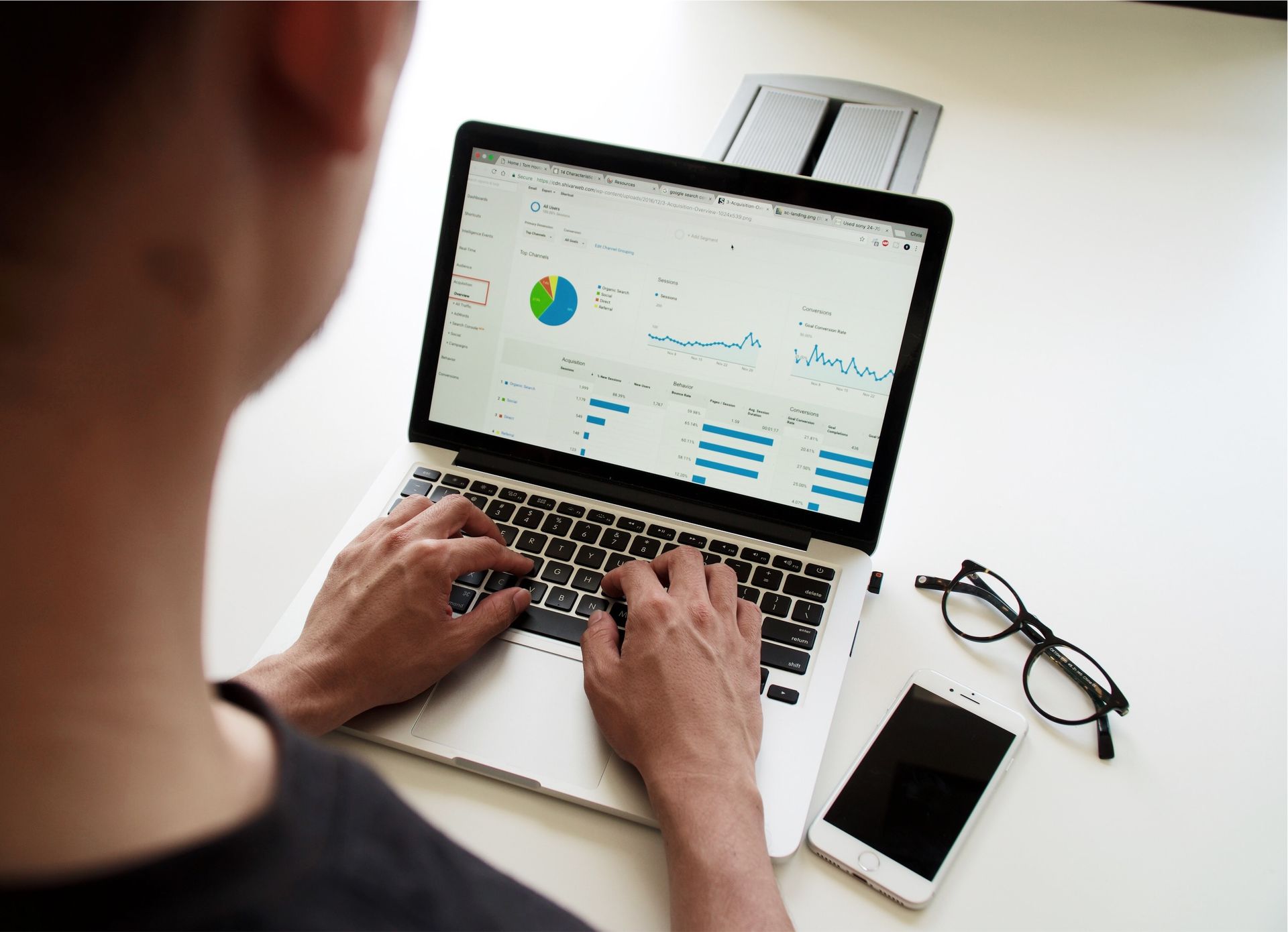
Receipts filed away in the manager's office, invitations by letter, and questions that go unanswered for days: that is still how many owners experience their property management. A digital property manager promises the opposite. What does the term actually mean, and how can you tell whether a manager lives up to it?
This article explains what digital property management covers for condominium owners' associations (WEG) and landlords, what has applied to online owners' meetings since 2024, where the limits are, and which questions to ask before you hire a manager. As of October 2026.
What is digital property management?Link to this section
A digital property manager is a WEG or rental manager that organises its work through an online platform. Owners view records, payments and resolutions there, report damage and vote, instead of writing letters or calling the office.
Legally, nothing changes. A digital manager is still the administrator (Verwalter) under the Condominium Act. It calls the owners' meeting at least once a year (§ 24(1) WEG), prepares the budget and the annual statement (§ 28 WEG) and carries out the association's resolutions. Digital describes how these tasks are done and documented.
Many providers combine the portal with fixed contacts and on-site visits. Before you hire a manager, check whether it is also present at the property.
Digital property manager or property management software?
Searching for "digital property management" also turns up many software vendors. Their programs are aimed at management companies or at landlords who manage their flats themselves. You buy a tool, and the work stays with you. A digital property manager, on the other hand, is someone you hire to do the management. The software is simply what it works with and what you see as a portal or app.
Looking for a manager that lets you see what is happening in your building at any time? Request a no-obligation quote from Ralph.
How does a digital property manager differ from a traditional one?Link to this section
The difference lies in how you get information and how quickly things happen. The tasks are the same.
- Records: Traditionally, receipts and contracts are kept at the manager's office and you need an appointment to inspect them. Digitally, they are in the portal, sorted by year and topic.
- Finances: Traditionally, you learn the reserve balance once a year with the statement. Digitally, you see the monthly owner contributions (Hausgeld) and the reserve continuously, with the date of the last update.
- Communication: Traditionally by phone during office hours and by letter. Digitally through messages in the portal or by email, with a traceable history for everyone involved.
- Damage and repairs: Traditionally, you report by phone and then often hear nothing for a long time. Digitally, with a photo in the portal, and you can see the status.
- Owners' meeting: Traditionally in person only. Digitally also hybrid or fully virtual, with invitation, documents and minutes in the portal.
- Resolutions between meetings: Traditionally by circular resolution on paper, which can take weeks. Digitally as a vote in the portal.
What a digital property manager handles onlineLink to this section
Almost everything the association exchanges with its manager can be handled digitally. Here are the main areas.
Documents and access to the management records
Every owner can demand to inspect the management records (§ 18(4) WEG). These include receipts, bank statements, service contracts, minutes and resolutions. A portal turns this right into routine: the records are there when you need them, for example before a meeting or when selling the flat.
Owner contributions, reserve and payments
In the portal you see which monthly owner contribution (Hausgeld) is due for your unit, which payments have arrived and the current balance of the association's maintenance reserve. The manager spots missing payments sooner and can send reminders earlier, which protects the association's cash flow.
Annual statement and budget
The annual statement and the budget are provided in the portal, including the individual statement for each unit and the receipts behind it. You can send questions through the portal, referring to the item and the receipt.
Owners' meeting: online, hybrid or virtual
The invitation to the owners' meeting must be sent in text form (§ 24(4) WEG), so an email is enough. The notice period should be at least three weeks. There are three formats:
- In person with online participation (hybrid): Owners can resolve that members may attend and vote without being present at the venue (§ 23(1) sentence 2 WEG). A simple majority is enough.
- Fully virtual: Since 17 October 2024, a WEG can resolve with at least three quarters of the votes cast that meetings are held without physical presence for up to three years (§ 23(1a) WEG). Participation and the exercise of rights must be comparable to an in-person meeting.
- Transitional rule until 2028: If such a resolution is passed before 1 January 2028, an in-person meeting must still be held once a year up to and including 2028, unless all owners waive this unanimously (§ 48(6) WEG).
The minutes of the owners' meeting are then available in the portal, together with the updated register of resolutions. Owners who cannot attend can still give a proxy.
Circular resolutions in the portal
Between two meetings, the association can decide by circular resolution. It is valid if all owners consent in text form (§ 23(3) WEG). For individual matters, the meeting can resolve in advance that a majority of the votes cast is sufficient. In the portal, everyone sees the motion, the documents and the state of the vote. What takes weeks by post is often decided in a few days.
Damage reports and repairs
A water stain in the stairwell or a broken front door is reported with a photo in the portal. The manager commissions a contractor, and everyone can see whether the job has been awarded, scheduled or completed. Duplicate reports and follow-up calls disappear.
Rental management: what landlords handle digitally
A portal also saves time in rental management and separate property management. Landlords see rent payments, tenancy agreements and deposit records online, and tenants can get their own access for damage reports and documents. The service charge statement must reach tenants no later than twelve months after the end of the billing period (§ 556(3) BGB). Read more about the deadline for the service charge statement in our article.
What are the advantages of digital property management?Link to this section
The biggest advantage is transparency: you don't have to ask to know how your building and your money are doing.
- Fewer queries: What is in the portal doesn't need explaining on the phone. That gives the manager more time for tasks that need experience, such as refurbishments or disputes within the association.
- Faster decisions: Circular resolutions and online votes shorten the time between a problem and a contract.
- Better meeting preparation: Documents and motions are available early, and the advisory board (Verwaltungsbeirat) can check receipts without travelling to the office.
- Location-independent: Owners who don't live in the building, such as investors or communities of heirs, can follow everything and vote remotely.
- Traceable: Messages, decisions and receipts are documented. That also helps later when the flat is sold or the manager changes.
- Less paper and postage: Invitations, statements and minutes go out digitally, and post is kept for the owners who need it.
Disadvantages and limits of digital property managementLink to this section
A portal doesn't replace good management. These are the points to know:
- Not everyone is online: Older owners or those without an email address must still be reachable by post and phone. A manager that only communicates digitally excludes part of the association.
- On-site presence still matters: Inspections, sign-off of contractor work and conversations with the caretaker take place at the property. Ask who is responsible and how often someone is on site.
- Digital doesn't automatically mean reachable: A contact form without a reply is no improvement. Ask for a commitment on how quickly queries are handled.
- Data protection: The portal holds names, bank details and payment records. The manager must comply with the GDPR and should be able to explain where the data is stored and who has access.
- Dependence on the provider: When you switch, the old manager must hand over all records. Clarify in advance in which format data and documents are exported. Our guide to changing your property manager explains how the handover works.
What does digital property management cost?Link to this section
There is no separate price for digital property management. As with any manager, the fee depends on the number of units, the size and condition of the property and the agreed additional services. Our overview What does a property manager cost? shows typical ranges and what drives the price.
Watch for extra charges in the quote: some managers bill the portal, online meetings or circular resolutions separately. Others include them in the base fee.
Checklist: how to recognise a digital property managerLink to this section
These questions help you compare quotes. A manager that calls itself digital should be able to answer each of them concretely.
- Which records are in the portal: receipts, bank statements, contracts, minutes, register of resolutions?
- Can owners see contributions, incoming payments and the reserve continuously, with the date of the last update?
- Is there an app, and can advisory board members, co-owners and tenants get their own access?
- Does the manager offer in-person, hybrid and virtual meetings, and are they included in the base fee?
- Can circular resolutions be run in the portal?
- How quickly are queries answered, and is there a commitment?
- When is the annual statement delivered, and what happens if that date is missed?
- How are owners without internet access informed?
- Who is your fixed contact, and how often is someone at the property?
- Where is the data stored, and how is it handed over if you switch?
Frequently asked questions about digital property managementLink to this section
Which property management software is best?
That depends on who uses it. Management companies need accounting, statements and meeting management in one system. Private landlords with a few flats can manage with simpler programs. If your WEG hires a manager, you don't need to choose software: look at the portal the manager provides instead.
Can I manage the property myself?
As a landlord, yes, rental management is not mandatory. A WEG is not obliged to appoint a manager either. Without one, however, all owners represent the association jointly (§ 9b(1) WEG), which quickly becomes cumbersome. Read more in our article on a WEG without a manager.
Is an online owners' meeting legally valid?
Yes, if the association has resolved to allow it. Online participation in an in-person meeting requires a majority resolution (§ 23(1) sentence 2 WEG), and fully virtual meetings require three quarters of the votes cast (§ 23(1a) WEG). The technology must give everyone the same rights as in person: listening, speaking and voting.
Will I still receive post from a digital property manager?
You should. The invitation to the meeting only has to be in text form, so an email is enough. Good managers still inform owners without an email address by letter and can be reached by phone.
Is it worth switching to a digital property manager?
If you are unhappy with reachability, transparency or late statements, usually yes. A WEG can dismiss its manager at any time by majority resolution, and the contract ends no later than six months afterwards (§ 26(3) WEG). Our article on terminating your property manager explains how to proceed.
Legal basis and sourcesLink to this section
As of October 2026. This information does not replace legal advice in an individual case.
- Condominium Act (WEG): § 9b (representation), § 18(4) (access to management records), § 23 (meeting, online participation, virtual meeting, circular resolution), § 24 (notice in text form, minutes), § 26(3) (dismissal), § 28 (budget, annual statement), § 48(6) (in-person meeting until 2028)
- German Civil Code (BGB): § 556(3) (deadline for the service charge statement)
- Osborne Clarke: Digitalisierung im Wohnungseigentum – das neue Gesetz zur virtuellen Versammlung: entry into force on 17 October 2024
How Ralph works as a digital property managerLink to this section
Ralph manages owners' associations and rental properties with software developed in-house. Because we build the portal ourselves, we can quickly adapt it to what owners need day to day.
- Portal and app: Documents, topics, finances, units, annual statement, owners' meeting, resolutions and payments in one place. You see owner contributions and the reserve with the date of the last update.
- Access for everyone involved: Co-owners, tenants and separate property managers can get their own access.
- Meetings and resolutions: Owners' meetings in person, hybrid or virtual, and circular resolutions digitally in the portal.
- Response time: We answer 80 percent of queries within 24 hours. You can reach us by phone from 10 am to 3 pm.
- Annual statement by the end of August: If it isn't ready by then, the association gets the management fee back for every further month.
- Without internet too: Owners who aren't online are informed by post and phone.
- Fixed contacts: For management and accounting, shown by name in the portal.
Our page on changing property manager shows how a switch to Ralph works. What ongoing management covers is on our pages for condominium management and rental management.
Want to know what managing your property with Ralph would cost? Request a free, no-obligation quote.


