The WEG Loan: How Owners Finance Major Measures Together

Your no-obligation quote in 2 minutes
What type of property management are you looking for?
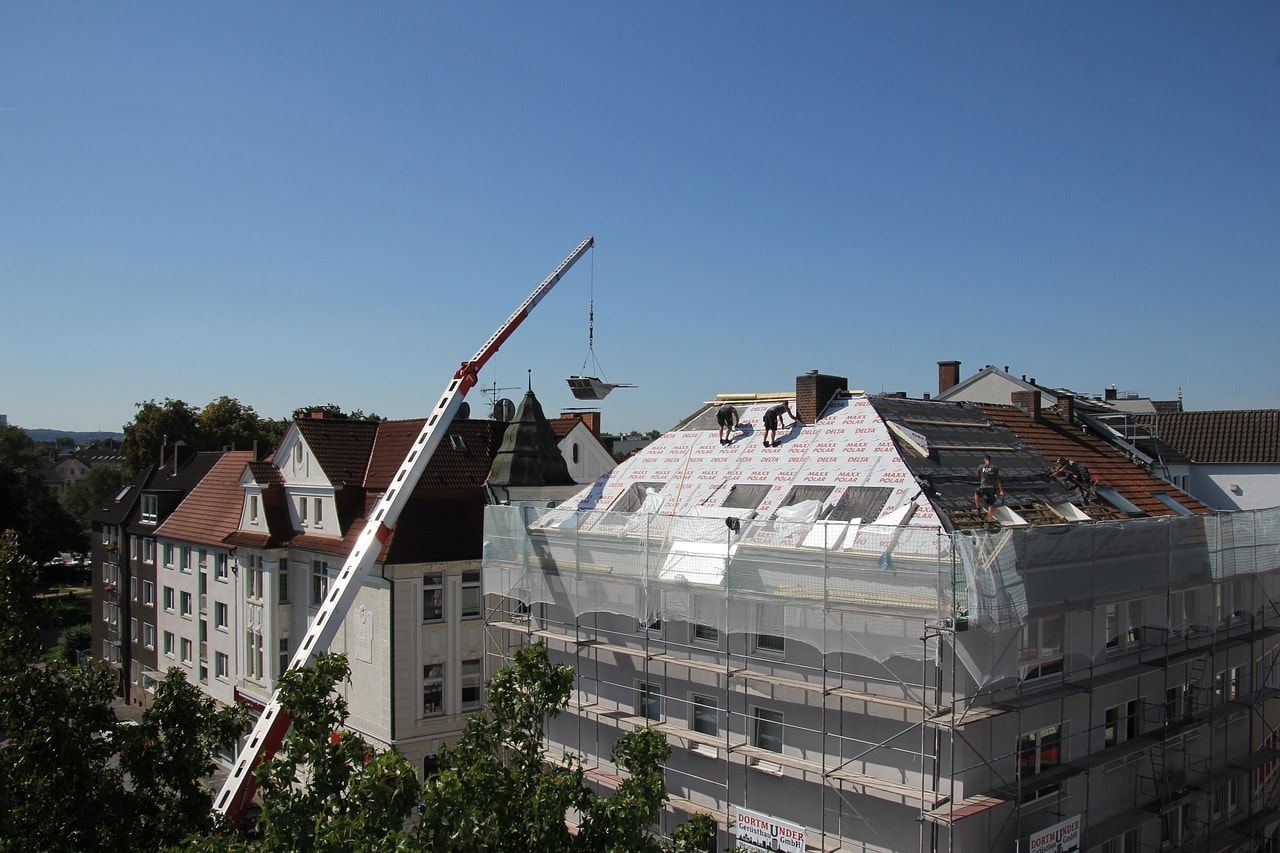
When major measures such as renovation, modernization, or conversion are pending in your homeowners' association, one question quickly arises: How do we finance this as a community?
If reserves are not available in sufficient amounts, a homeowners' association loan, property community loan, or association financing moves increasingly into focus.
In this detailed guide, you will learn how you can jointly finance large measures in the homeowners' association that require funding. Our goal is to give you as owners a clear and practical overview so that you can make good decisions together.
Why a Property Community Loan Makes Sense for Many Homeowners' AssociationsLink to this section
Many homeowners' associations face major renovation measures sooner or later: the facade needs improvement, the roof has to be renewed, the heating system no longer complies with legal requirements, or the property is to be energetically modernized. Such measures often exceed the existing maintenance or repair reserve.
A special assessment is possible, but financially difficult for many co-owners to handle – especially with high sums, such as 20,000–40,000 euros per residential unit.
This is where the advantage of a homeowners' association loan becomes apparent: The community jointly takes out a loan, distributes the payment over many years, and thereby creates financial flexibility.
Another argument: Current jurisprudence has clarified in recent years that a homeowners' association as a community is fundamentally creditworthy.
This makes the association loan a full-fledged financing instrument that more and more communities of owners are using.
The Basics: What is a Homeowners' Association Loan at All?Link to this section
A property community loan is a joint loan taken out by the homeowners' association – not by individual owners. The association uses the loan for a financing measure, such as:
- Facade renovation
- Modernization of heating systems
- Energy improvements
- Barrier-free conversion
- Roof renovation
- Replacement of elevators
- or other extensive renovation measures
Every homeowners' association is legally capable according to $\S 9a$ of the Condominium Act. This means it can maintain its own association account and also take out a loan.
The repayment is made by the homeowners' association, usually distributed among all owners according to their co-ownership shares.
Prerequisites for Taking Out a Property Community LoanLink to this section
Certain requirements must be met for your homeowners' association to be allowed to take out a loan:
- Resolution Competence of the Owners' AssociationThe owners' association must decide by resolution that a homeowners' association loan will be taken out.Basis: Jurisprudence and $\S 19$ (1) of the Condominium Act.This sets out the principles of proper administration, which also include the financing of necessary measures.
- Necessary DocumentsBanks typically require the following for the loan application:
- Current economic plan of the association
- Minutes of the owners' meeting including the resolution
- Proof of reserves
- Calculation of financing needs
- Information about the property (age, condition, planned measures)
- Quotes from the executing companies, if applicable
- Creditworthiness information about the community
- Clear MajorityA majority resolution is usually sufficient.A special quorum is generally not required as long as the association loan is necessary for proper maintenance or modernization.
- The Planned Measures Must Comply with Proper AdministrationThis means: The measure must be necessary, economically sensible, or legally prescribed. This gives homeowners' associations a solid foundation to clearly justify taking out a loan.
How Does the Decision-Making Process Work?Link to this section
In the owners' meeting, the need for renovation or modernization is first explained.
Then the vote takes place on:
- the planned measure
- its financing
- taking out a property community loan
- the selection of the credit institution and the conditions
All points are documented in the minutes. You as owners should pay particular attention to the parameters mentioned in the resolution:
- Sum of the association financing
- Annual interest rate
- Term
- Repayment modalities
- Interest rate hedges
- Collateral (if required)
A clearly formulated resolution is important so that the bank can pay out the association loan.
The Advantages of a Property Community Loan Compared to a Special AssessmentLink to this section
Many owners underestimate how effective a property community loan can be. Here is an overview of the most important advantages:
- More FlexibilityNot every owner can pay high sums at short notice. An association loan makes major modernizations possible in the first place.
- Lower Financial Burden Per Residential UnitInstead of a single payment, monthly installments arise, which are integrated into the economic plan.
- Protection Against Additional Payment ObligationsWith a well-calculated association loan, the need for later special assessments is often eliminated.
- Better Implementation of Long-Term Renovation GoalsComplex or urgent infrastructure measures can be started early.
- Increase in Property ValueModernized buildings achieve higher market prices and are more future-proof.
What Risks Must Owners Consider?Link to this section
Of course, there are also risks that you should be aware of:
- If owners do not pay their monthly fee, this can burden the community.
- Interest rates can rise – with variable interest rates.
- If an owner leaves the community (sale), the homeowners' association remains the contractual partner of the bank.
- There is increased administrative effort for property managers.
However, competent management ensures that these risks are recognized and managed early on.
What Role Does the Property Manager Play?Link to this section
The property management is an important partner in the entire association financing process. We, as your property management, accompany you through every step and ensure that all processes run in a structured, transparent, and legally sound manner.
First, we obtain the necessary quotes for the planned measure and at the same time compare various loan offers from different banks. Then we check the respective conditions to provide the owners' association with a well-founded basis for decision-making.
Furthermore, we carefully prepare the owners' meeting, create the corresponding draft resolutions, and take over communication with the participating banks. We also take care of all the necessary documents for the loan application and ensure that they are submitted completely and correctly.
After approval, we integrate the financing into the economic plan and monitor the use of the provided funds so that disbursements and invoices are handled properly.
The documentation is also our responsibility – from minute-taking to the ongoing administration of all documents related to the association loan.
In short: We ensure that financing and processes run smoothly within your owners' association and that you are well-informed and legally secured at all times.
Funding Programs: What Opportunities Are There?Link to this section
Homeowners' associations can receive attractive grants or loans through the $\text{KfW}$ (Kreditanstalt für Wiederaufbau) and other programs.
Typical examples:
- $\text{KfW}$ program for energy-efficient renovation
- Funding for barrier removal
- Programs for renewable energy (e.g., $\text{PV}$ systems)
- Grants for facade, insulation, windows, or heating optimization
Important: Funding programs have strict requirements and must often be applied for before the start of the measure.
Association Financing: How is the Loan Amount Calculated?Link to this section
The sum of the association financing results from the total costs of the planned measure and is influenced by various factors. These include the existing reserves that can be used for financing, as well as the collateral required for the loan.
Possible grants are also taken into account before the final financing need is determined. The higher the reserves of the association, the lower the actual required loan amount usually is.
The Process of Taking Out a Loan – Step by StepLink to this section
- Determine Renovation Need: The scope of the required work is precisely defined.
- Obtain Quotes and Calculate Costs: A detailed cost breakdown is prepared, based on which the specific financing need is calculated.
- Compare Offers: The conditions of various banks are compared.
- Owners' Meeting Resolution: The owners' meeting decides on the measure and taking out the loan.
- Apply for Loan: The credit application is submitted, which the bank reviews before the disbursement is made to the homeowners' association.
- Use Funds: The funds are then used according to the planned measure.
- Integrate Repayments: The running loan installments are integrated into the economic plan.
We, as your property management, reliably accompany you through each of these steps.
Checklist for Owners: How to Make the Right Decision About Taking Out a LoanLink to this section
- Is the measure necessary?
- Are reserves insufficient?
- Is a special assessment unreasonable for many?
- Are there funding opportunities?
- Are multiple loan offers available?
- Are the term, annual interest rate, and conditions transparent?
- Does the measure comply with proper administration?
If you can answer "Yes" to all these questions, an association loan is usually a good solution.
FAQ: Frequently Asked Questions from Owners about Association FinancingLink to this section
Who is liable for the homeowners' association loan?
The homeowners' association as a whole is always liable for a community loan, not the individual owners with their private assets.
This means: The bank cannot claim against a single person for the entire loan amount. Each unit only bears the share corresponding to its co-ownership share. This liability is covered by the community assets and the monthly fee payments.
In the event of payment defaults by individual owners, the legally provided procedure within the community is first applied – such as reminders or the judicial enforcement of monthly fee claims. Only if the community cannot meet its obligations does a risk arise for the association as a whole, not for individual private persons.
What happens when a residential unit is sold?
When a unit is sold, the new owner automatically takes over all running obligations that are accounted for via the monthly fee, including the proportional loan installments.
The previous owner therefore does not have to "take the loan with them." The crucial factor is that the loan runs through the association and is covered by the monthly fee payments via the economic plan.
Important: A notarized notice of existing association loans is customary and protects buyers from surprises. As soon as the transfer of ownership is completed in the land register, all obligations (and rights) pass completely to the new party.
Can taking out the loan be blocked by individual owners?
No. A single person cannot prevent taking out the loan.
A majority resolution of the owners' meeting is sufficient for the decision. The exact majority is determined by the Condominium Act and the respective resolution form (usually a simple majority). Even if individual people vote against the association financing, they are bound by the resolution passed and must bear their share through the monthly fee.
This protects the community from stagnation, for example, when an urgently needed renovation measure – such as roof renovation, facade, or heating – is pending, but not everyone agrees.
Does one have to undergo a credit check before financing?
A credit check of individual owners generally does not take place.
Since the financing is taken out by the homeowners' association as a whole, the bank checks the community's financial capacity based on documents such as the economic plan, reserve status, minutes, and resolutions. Individual people do not have to present private bank statements or proof of earnings.
How do reserves and maintenance shares affect the financing measure?
The higher the community's reserves, the lower the actual financing need.
Existing reserves are factored into the financing before the loan is taken out, so only the remaining share has to be financed. In practice, this means: Reserves protect against high loan amounts and reduce the long-term monthly burden for all owners.
Conclusion: A Property Community Loan Creates Stability and Enables Important InvestmentsLink to this section
Major maintenance or modernizations are part of the life cycle of every property.
A homeowners' association loan offers your community a flexible, sustainable, and predictable financing solution that has enormous advantages for many owners.
With the right preparation, a clear resolution, and professional property management, taking out a loan becomes a secure and transparent process – entirely in the spirit of a functioning and responsible owners' association.
If you have questions about a specific renovation project or would like support with loan planning, we as your property management are of course available to you at any time.
Together we will find the best solution for your community – reliably, transparently, and with a view to the long-term preservation of your property's value.
Do You Already Know Ralph?
If you are looking for property management that not only manages but truly stands by your side, you should get to know us. At Ralph, we combine modern administrative structures with personal support, clear communication, and the aspiration to keep your property in the best condition long-term. We reliably accompany your homeowners' association through all challenges – from financing and renovation to digital administration and legal certainty.
And the best part: Switching to us is uncomplicated and possible at any time. Get a free quote now.